Average Reviews:

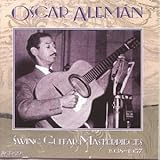
(More customer reviews)Are you looking to buy Swing Guitar Masterpieces 1938-1957? Here is the right place to find the great deals. we can offer discounts of up to 90% on Swing Guitar Masterpieces 1938-1957. Check out the link below:
>> Click Here to See Compare Prices and Get the Best Offers
Swing Guitar Masterpieces 1938-1957 ReviewFirst off, I just want to say that there is way too much talk of Oscar being Djangoesque. To hear some of this stuff you'd think Oscar is just a two-bit Django clone. The truth is that they are quite different from each other. Is one better than the other? Maybe, but I'd be hard-pressed to pick the better one. Sometimes when I'm listening to one of them I end up telling myself that he (Guy #1) is without a doubt the better of the two. Then the next time I listen to Guy #2 I find myself saying I was nuts to think Guy #1 was better. It all comes down to your mood.Oscar's music (and I don't mean just his playing, I mean his band{s} and repertoire) is more diverse. It covers a wider range of styles and moods than did Django. I rarely agree with or care about liner-notes, but these liner-notes are 100% accurate when they say that Oscar's arrangements are the more interesting of the two men. When Django and Oscar's repertoire overlaps, I almost always find myself preferring Oscar's version of the song.
Another reason I also like this Oscar set is because obviously, at least a fair amount of the time, he was recorded by better engineers than was Django. Take for instance those two 1939 takes of the QHCF (Django) doing Hungaria. Django is on fire but you have to strain to hear him because his guitar is buried in the mix. You can hear his notes but you really don't get a taste of his tone. The year cannot be blamed for these problems in recording quality, nor can the sonic wizards at the JSP label who have released the best sounding QHCF remasters to date. For instance, Lonnie Johnson's earliest Okeh stuff was recorded in the late 1920s and early 1930s and his guitar sounds totally rich and full... way bigger than pre-war Django usually sounds, and it isn't Django's fault, it's the original engineers or equipment. Here though Oscar is usually recorded very well so you get a nice big taste of his tone on these recordings. Yet another plus.
I know that history will (and has) indeed remember Django as the better guitarist of the two, and I myself would probably agree with that 55% of the time, but in the big picture I think Oscar was probably the more interesting all-around musician. It's just really tough to overlook his considerable talents as an orchestrator, arranger, player, singer, and composer. Although if "vocal jazz" isn't your thing, don't worry. It's not mine either. There is indeed some singing and scatting on this set, but not very much. Plus, I actually think Oscar, aside from Armstrong, may be the only other scatter that I actually like.Swing Guitar Masterpieces 1938-1957 Overview
Want to learn more information about Swing Guitar Masterpieces 1938-1957?
>> Click Here to See All Customer Reviews & Ratings Now

0 comments:
Post a Comment